
A smile seems small, almost too simple to matter. But think about the last time a stranger smiled at you at the grocery store, or the last time a coworker greeted you with a warm expression before a stressful meeting. That tiny moment can change the tone of an entire day.
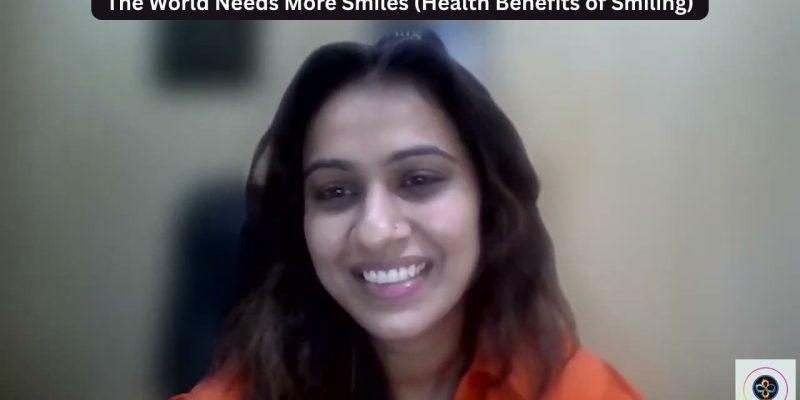
In an episode of Everyone Has A Story, host Roger talks with Ppriyal Lokhandwala, a virtual healer, possibility coach, corporate trainer, and keynote speaker, about why smiling matters right now, what it signals to others, and how it can shift energy in a room, at home, and at work.
A parking lot moment that says a lot about the world
Roger opens with a story from 12 to 15 years ago, during a tough season in his life. He was living on Long Island, New York, while his wife was going through cancer surgeries. Family came to help, including his wife’s sister, Denise, visiting from South Dakota.
One day, Denise went to the grocery store. She heard a song on the radio that made her feel good, the kind of song that stays in your head. She stepped out of the car smiling, carrying that light moment with her across the parking lot.
Then a man saw her and said something that stuck: “What are you smiling for? You can’t be that happy,” as if smiling needed permission, or proof.
Denise answered honestly. She smiled because she’d just heard a beautiful song. The man walked away grumbling.
That story hits differently now. Roger points out that during the pandemic, many of us couldn’t even see smiles because masks covered them. You could sense it through someone’s eyes, but it wasn’t the same. Now masks are mostly gone, but in many workplaces and businesses, you still walk in and feel the weight. People look tired, unhappy, checked out, like they don’t want to be there.
So what is a smile, really, and why does it matter?
What a smile communicates before you say a word
Priyal describes a smile as a kind of “first personality test,” not in a judgmental way, but in a realistic way. When you meet someone, your eyes naturally look for cues:
- Do they look open or guarded?
- Do they seem safe to approach?
- Do they feel present or irritated?
Before you notice someone’s clothes, you notice their face, especially their eyes and mouth. A smile can separate someone in a crowd. It can suggest confidence, openness, and willingness to connect.
Priyal also points out something many people forget: smiles are “transport.” If one person smiles, it spreads. It changes the mood and makes the space feel safer.
Smiling as a universal language (even on the phone)
Roger calls smiling a “universal language,” and Priyal expands on it in a practical way.
You can travel anywhere, Russia, China, anywhere, and a smile still means something. Even if you don’t share words, a smile often signals, “You can talk to me.” It makes someone more approachable when you’re lost, uncertain, or nervous about asking for help.
She also highlights that you can hear a smile. A smile changes your voice tone, even over the phone. It’s not only visual communication, it’s a full-body signal.
Priyal mentions there are many types of smiles (she references “19 different ways” someone can smile), from half-smiles to “anyway” smiles, and even smiles that don’t feel genuine. People pick up on that faster than we think.
Why smiles felt harder during the pandemic (and why that still matters)
Masks created a strange social gap. Priyal describes how, when you can’t see someone’s smile, it becomes harder to judge whether they’re approachable. You hesitate. You second-guess. You can’t quickly find that “safe zone” signal.
Even now, without masks, that question remains in many workplaces and customer-facing businesses: do people feel safe around each other? Do they feel comfortable asking a question, raising a concern, or making a mistake and owning it?
Priyal’s point is simple: when you’re stressed, you’ll naturally choose the person who looks friendly, not the one with a hard expression. Smiles reduce friction in everyday human interactions.
Smiles, energy, and stress (why your body responds)
Roger describes smiles as energy, like electricity. Priyal connects that idea to the body.
She explains that physical gestures affect your brain chemistry. Smiling releases endorphins and helps reduce stress. It’s part of why laughter therapy starts with something basic: a smile.
A helpful image from the conversation is the idea of changing posture and expression to change your inner state:
- Looking down while thinking about something negative can intensify it.
- Looking up while thinking about the same thing can soften it.
- Shaking out tension physically can help the body let it go.
The bigger message is that the body isn’t separate from your mood. A small physical change can shift what you feel.
Health benefits of smiling (the list that surprises people)
Priyal shares several ways smiling can support well-being. In her view, smiling can:
- Help reduce stress
- Help reduce pain
- Help you feel younger and look younger
- Increase endurance
- Boost the immune system
- Improve your social life and romantic life
- Spread positive mood to others (because it’s contagious)
If you want a deeper read focused on the immune system angle, this article breaks down how smiling and laughter are often linked with stress reduction and immune response.
Smiling at work: why it affects culture, customers, and retention
Roger’s audience includes business owners and leaders, so the conversation turns toward work culture.
The idea is straightforward:
- If leaders smile more, teams often loosen up.
- If teams feel safer, they communicate better.
- If employees feel better, customers feel it.
- If the customer experience improves, the business benefits.
Priyal adds an important nuance. Many professionals believe that to be taken seriously, they must look serious. That mindset can backfire. A friendly, warm leader can still be competent and firm, but they’re also easier to approach.
She references a study scenario: two doctors with equal skills, but the friendlier one was rated higher. The point is not that smiles replace skill. It’s that people judge the full experience, not only the technical outcome.
And in today’s job market, she argues, pay and perks only go so far. People want quality of life and a workplace that doesn’t feel emotionally draining. If employees don’t feel happy or welcomed, they leave, even if the incentives look good on paper.
Why people stop smiling (and what ego has to do with it)
Priyal sees two common reasons people hold back smiles:
1) “Serious” becomes an identity
Somewhere between childhood and adulthood, many people get taught that life is responsibility, deadlines, and pressure. Over time, the face matches the burden. Straight faces become the default.
2) Ego builds barriers
People build emotional armor to protect themselves. They worry about how others will react, what questions they’ll be asked, what criticism might come. That armor can look like distance, coldness, or tension.
The cost is often invisible until it shows up in turnover, poor communication, and teams that feel disconnected.
She also describes a mindset trap: focusing on what’s wrong. If you constantly ask, “What’s my next problem?” you’ll always find something. Your brain is good at proving you right.
Instead, she suggests shifting the question to: “What can I do to make it better today?”
“Fake it till you make it” (and why it’s not as silly as it sounds)
One of Priyal’s most practical points is that you don’t have to wait for the perfect moment to be happy.
Many people postpone happiness:
- “When I get the promotion, I’ll be happy.”
- “When I buy the bigger house, I’ll be happy.”
- “When things calm down, I’ll be happy.”
Her pushback is simple: why delay it?
Even if you don’t feel great today, starting with a smile can act like a signal to your brain. If you smile and tell yourself you’re okay, your mind may start looking for reasons to support that story.
This isn’t about pretending life is perfect. It’s about interrupting the habit of carrying tension by default.
The SMILE coaching model (Ppriyal’s practical framework)
When Roger asks how she helps leaders and teams build a healthier, more positive environment, Priyal shares a coaching framework she calls the SMILE model.
Here’s a clean breakdown of how she describes it:
| Letter | Focus | What it means in real life |
| S | Self-awareness | Notice what’s already good, and what helps you feel safe and grounded. |
| M | Mindset | Get clear on values and beliefs, then align them with real goals. |
| I | Invest in individuality | Honor what makes you unique, listen to intuition and how your body responds. |
| L | Learn to move into action | Take steps, even small ones, so insight turns into change. |
| E | Enlightenment (and enthusiasm) | Recognize progress, feel empowered, and build energy with less inner friction. |
A theme runs through every part of the model: misalignment creates friction. When your values and goals fight each other, life feels heavy. When they match, you have more energy, and smiling becomes more natural.
A quick reality check for leaders: the room reads your face
Priyal makes a strong point about communication, especially in leadership roles.
When you walk into a meeting with a hard expression, you may think you’re showing authority. But you might also be closing doors you didn’t mean to close. People share less. They ask fewer questions. They hide problems until they become expensive.
A smile doesn’t remove standards or accountability. It tells people you’re open enough to hear the truth.
If you want an additional look at why smiling helps relationships between adults and kids (and why that social connection matters), this resource from a children’s hospital is helpful: why smiling is good for both parents and kids.
Where to find Priyal Lokhandwala
Priyal shares that people can reach her on LinkedIn and Instagram.
Conclusion: the simplest biohack is still the simplest
A smile isn’t just a facial expression, it’s a signal. It tells people you’re safe to approach, it changes the energy in a room, and it can shift how you feel in your own body. Priyal’s message lands because it’s so direct: it’s easy to smile, and harder to frown.
If you want one takeaway to carry into your next meeting, your next customer interaction, or your next rough day, make it this: start with a smile, even a small one, and see what changes around you.